
 Posted by
 In the vast tapestry of the visual arts, there exists a realm where each brushstroke is not merely a mark on a canvas, but an entry point into a universe of emotion and thought. This dimension, where empty spaces resonate with the symphonies of silence, challenges the very essence of perception. Here, the absence of color or form is as significant as its presence, inviting a deeper understanding of art’s potential to convey the unspeakable.
Universes of Brushstrokes: crafting Audible Silences
These brushstroke universes are not confined by the tangible boundaries of traditional art. Instead, they extend into the realms of the subconscious, where the silent symphonies of empty spaces speak volumes. Artists who navigate this space embrace the challenge of crafting not just images, but experiences that resonate on multiple levels. As one gazes upon such works, it becomes clear that the spaces between the strokes are not voids, but vibrant fields of potential and meaning.
Often, these artworks are characterized by their ability to evoke a powerful auditory experience. The silence within the art can be likened to a pause in a musical symphony, where the absence of sound heightens the anticipation and enriches the composition. This interplay between visual silence and auditory perception is a testament to the profound capabilities of the artist’s hand.
This unique approach to art challenges conventional appreciation, requiring an openness to perceive what lies beyond the visible. The viewer becomes an active participant, engaging with the artwork on a level that transcends mere observation.
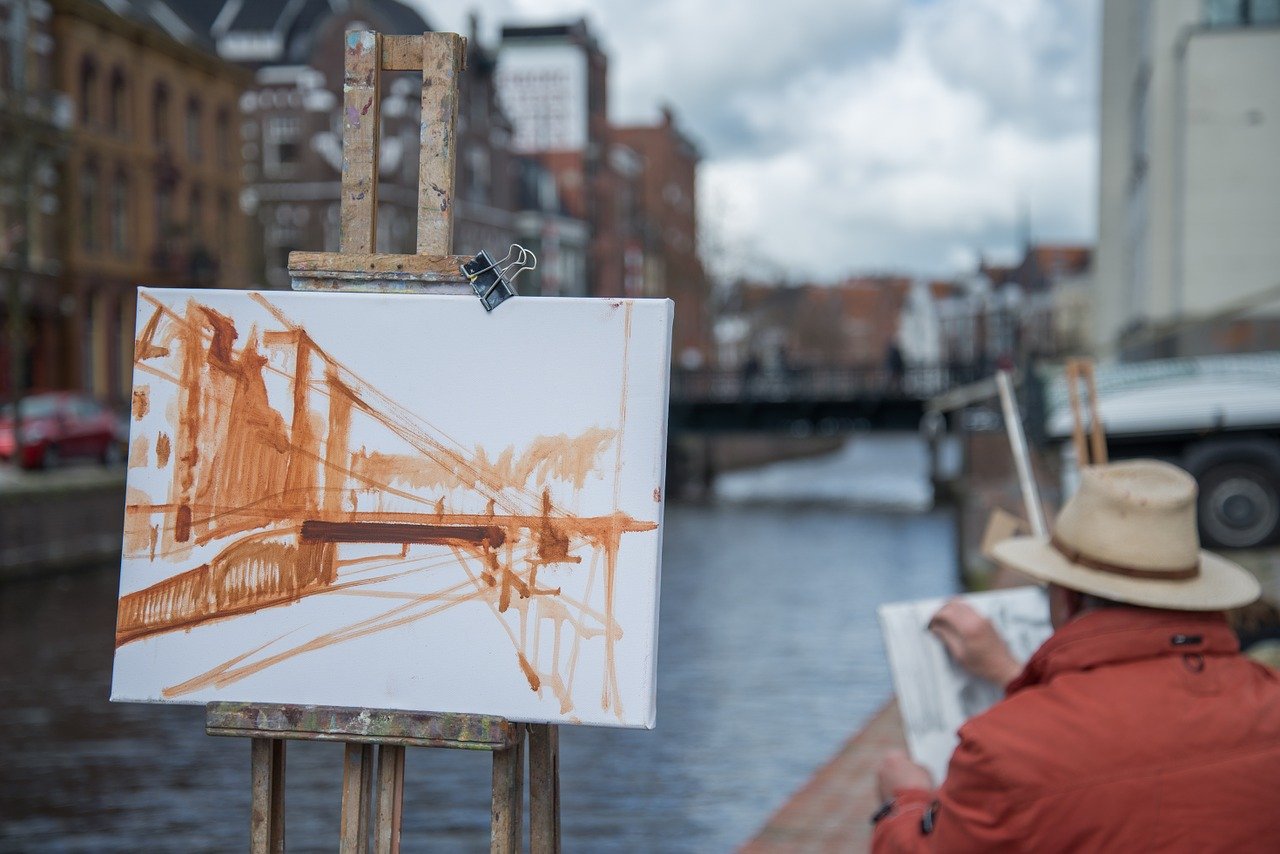
The Role of Negative Space in Visual Arts
Negative space, often underestimated, plays a vital role in enhancing the impact of visual art. This art form thrives on the delicate balance between presence and absence, where the empty spaces are as integral to the composition as the filled ones. The strategic use of negative space guides the viewer’s eye, leading it on a journey through the artwork’s narrative.
Negative space serves multiple functions. It can provide relief amidst complexity, offer contrast to enhance focal points, or even tell its own story independently. By understanding and utilizing negative space, artists create a dynamic interplay that enriches the overall experience.
In this context, the following points illustrate how negative space can transform an artwork :
- Enhancing Focus: directs attention to key elements within the artwork.
- Creating Balance: establishes harmony between elements, promoting aesthetic appeal.
- Evoking Emotion: invokes feelings through the strategic absence of form.
- Narrative Depth: suggests underlying stories and themes through subtlety.
Exploring the Limits of Perception
Art that harnesses the power of empty spaces invites viewers to explore the boundaries of their own perception. This exploration is akin to a journey through uncharted territory, where each step reveals new insights into the human condition. The viewer is encouraged to ponder the interplay between what is seen and what is felt, between silence and sound.
This type of art serves as a bridge between the tangible and the intangible, offering a glimpse into worlds that exist beyond the physical realm. By challenging conventional notions of art, these works expand the horizons of what is possible, both in creation and interpretation.
Ultimately, the symphony of brushstrokes and empty spaces becomes a dance of perception, one that resonates long after the viewer has left the gallery. It is a testament to the enduring power of art to speak to the soul, in a language that transcends words and images.
The Everlasting Impact of Visual Art
Visual art, in its many forms, has the power to leave a lasting impact on those who engage with it. This impact is not limited to the immediate experience of viewing, but can extend into the deepest recesses of thought and emotion. By embracing the potential of empty spaces and the symphonies they contain, art becomes a conduit for profound reflection and lasting inspiration.
As viewers continue to explore and interpret these brushstroke universes, they uncover layers of meaning that resonate with their own experiences and perceptions. Each encounter with such art offers a new perspective, a fresh insight, and an enduring connection to the silent symphonies that lie within.
The journey through these visual landscapes is one of discovery and transformation, highlighting the boundless possibilities that art holds. In this realm, where brushstrokes create universes and empty spaces sing symphonies loud, the true beauty of the visual arts is revealed.